
ANISOTROPIC TISSUE - THE UNDERESTIMATED ABILITY OF HUMAN TISSUE
Disclaimer: The content of this blog post, authored by Dr. Moran Sciamama-Saghiv, is provided for informational and educational purposes only and does not constitute medical advice, diagnosis, or treatment. No doctor–patient relationship is created by reading or applying the information. Readers should always consult a licensed healthcare professional before making decisions related to medications or treatment. Neither the author nor any affiliated party assumes any liability for actions taken based on this content.
You might not realize it, but your body’s tissues have unique properties that affect how they function and respond to stress. One of these properties is anisotropy, which means that a tissue behaves differently depending on the direction of the force applied to it. Understanding what anisotropic tissue is, which tissues in your body show this trait, and how it influences your health and exercise results can give you an edge in training smarter and recovering better.
What is Anisotropic Tissue?
Anisotropic tissue refers to biological tissue that has direction-dependent properties. This means the tissue’s strength, stiffness, or elasticity varies based on the direction you test or load it. Unlike isotropic materials, which behave the same in all directions, anisotropic tissues have a preferred orientation of fibers or cells that give them unique mechanical characteristics. In your body, this directional behavior is often due to the alignment of collagen fibers, muscle fibers, or other structural components. For example, tendons and ligaments have collagen fibers aligned mostly in one direction to resist pulling forces along that axis. This alignment makes them strong and flexible in the direction they are designed to handle but less so in other directions.
Which Human Tissues are Anisotropic?
Several types of tissues in your body show anisotropic behavior. Here are the main ones:
Tendons and Ligaments
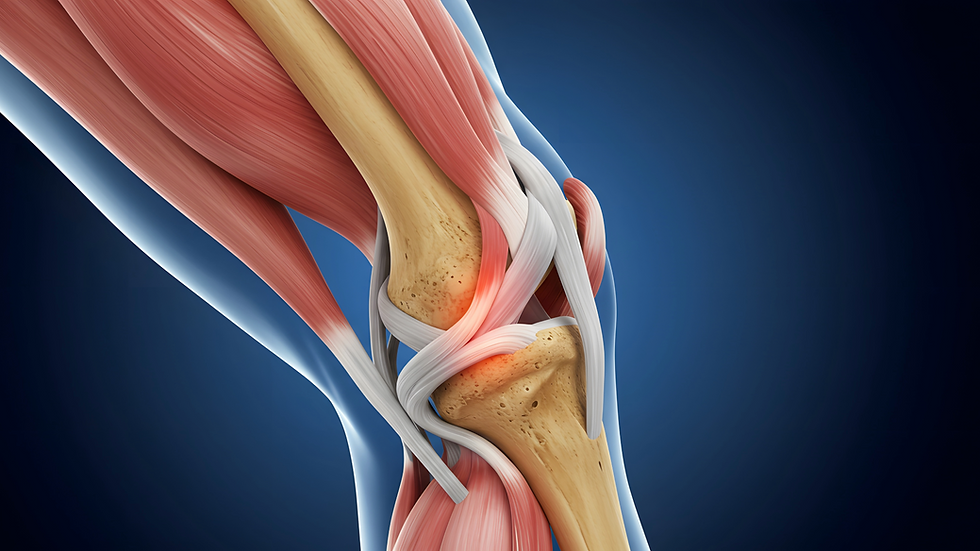
These connective tissues connect muscles to bones and bones to bones, respectively. Their collagen fibers run mostly parallel to the direction of force they experience, making them very strong along that line but weaker when forces come from other angles.

Muscle Tissue
Skeletal muscles have fibers aligned in specific directions to generate force efficiently. The anisotropic nature helps muscles contract and stretch optimally along their fiber direction.
Bone
Bone is anisotropic because its internal structure, including the orientation of collagen and mineral crystals, varies depending on the load direction. This helps bones resist different types of forces like compression, tension, and shear.

Cartilage
Articular cartilage in joints has a layered structure with collagen fibers oriented differently in each layer. This arrangement helps it absorb shock and reduce friction during joint movement.

Skin
Skin shows anisotropy due to the orientation of collagen and elastin fibers. This affects how skin stretches and recovers, which is important for wound healing and surgical procedures.

Advertisement

Advantages of Anisotropic Tissue
Having anisotropic tissues gives your body several benefits:
Strength and Efficiency
By aligning fibers in the direction of common forces, tissues can be stronger and more efficient. For example, tendons resist pulling forces during movement without wasting energy.
Flexibility and Adaptability
Anisotropic tissues can stretch or deform more easily in some directions, allowing for flexibility where needed while maintaining strength where it matters.
Damage Resistance
Directional strength helps tissues resist injury from typical stresses. For example, bones are stronger along the axis of weight-bearing, reducing fracture risk.
Energy Storage and Release
Some anisotropic tissues, like tendons, can store elastic energy when stretched and release it during movement, improving efficiency in activities like running or jumping.
Disadvantages of Anisotropic Tissue
Despite these benefits, anisotropic tissues also have some drawbacks:
Vulnerability to Unusual Forces
Because they are weaker in directions other than their main fiber alignment, anisotropic tissues can be more prone to injury from unexpected or multi-directional forces.
Complex Healing
Damage to anisotropic tissues can be harder to repair because the tissue’s structure must be restored in the correct orientation to regain full function.
Limited Adaptation Speed
While these tissues adapt over time, the process can be slow. Sudden changes in activity or load direction can increase injury risk.
How to Use Anisotropic Tissue Properties to Improve Health and Exercise
Knowing your tissues are anisotropic can help you train smarter and recover better. Here are practical ways to use this knowledge:
Train with Directional Awareness
Since tendons, ligaments, and muscles are strongest along their fiber direction, focus on exercises that load tissues in their natural alignment. For example:
When strengthening tendons, use movements that mimic their usual force direction, such as straight-line pulls or pushes.
Avoid sudden twisting or lateral forces that tissues are less prepared to handle.
Include Multi-Directional Training Gradually
To reduce injury risk from unusual forces, gradually introduce exercises that load tissues in different directions. This helps tissues adapt and become more resilient over time.
Add lateral lunges, rotational movements, and varied grip positions slowly.
Use controlled, low-intensity movements before progressing to higher loads.
Use Proper Warm-Up and Stretching
Warming up increases tissue temperature and elasticity, improving their ability to handle forces. Stretching along the fiber direction can enhance flexibility without damaging the tissue.
Dynamic warm-ups that mimic your activity prepare anisotropic tissues effectively.
Stretch muscles and tendons gently along their length, avoiding overstretching sideways.
Focus on Recovery and Tissue Health
Because anisotropic tissues heal slowly and need proper fiber alignment, support recovery with:
Adequate rest between intense sessions.
Nutrition rich in collagen-building nutrients like vitamin C and protein.
Techniques like massage or foam rolling to promote blood flow and fiber alignment.
Use Targeted Rehabilitation After Injury
If you injure anisotropic tissue, rehab should focus on restoring fiber orientation and strength along the correct direction.
Physical therapy exercises should load the tissue progressively along its natural axis.
Avoid early multi-directional stress that could disrupt healing.
Optimize Movement Patterns
Good technique reduces abnormal forces on anisotropic tissues. For example:
Proper running form minimizes twisting forces on tendons and ligaments.
Correct lifting mechanics protect ligaments and muscles from strain.
Examples of Applying Anisotropic Tissue Knowledge
Runner’s Achilles Tendon:
The Achilles tendon is highly anisotropic, designed to handle forces along its length during running. Runners who train with gradual increases in load and include calf strengthening along the tendon’s axis reduce injury risk.
Weightlifter’s Shoulder Ligaments:
Shoulder ligaments resist forces in specific directions. Weightlifters who focus on controlled overhead presses with proper form protect these ligaments from strain caused by unusual angles.
Post-Surgery Skin Healing:
Surgeons often make incisions along skin tension lines, which correspond to collagen fiber orientation, to promote better healing and reduce scarring.
Advertisement

Final Thoughts on Anisotropic Tissue
Understanding anisotropic tissue helps you appreciate how your body is built to handle forces in specific ways. This knowledge lets you train more effectively, reduce injury risk, and support recovery by respecting the directional nature of your tissues. Next time you plan your workout or rehab routine, think about the direction of forces and how your tissues respond. This simple shift can lead to stronger, healthier movement and better long-term results.

Tags associated with this blog post:
anisotropy, isotropy, material science, directional dependence, mechanical properties, stress, strain, elasticity, strength, stiffness, deformation, crystal structure, crystalline materials, fiber orientation, composite materials, metallurgy, solid mechanics, orthotropy, plasticity, elasticity modulus, thermal conductivity, electrical conductivity, magnetic properties, optical anisotropy, birefringence, refractive index, acoustic anisotropy, diffusion, permeability, grain structure, texture, molecular alignment, strain energy, shear stress, engineering materials, stress distribution, anisotropic behavior, continuum mechanics, fracture mechanics, elasticity theory, deformation analysis, finite element analysis, structural engineering, mechanical anisotropy, physical properties, microstructure, mechanical testing, directional strength, material deformation, material behavior, laminar composites, crystal anisotropy, thermodynamics, tensor analysis, stress tensor, strain tensor, wave propagation, anisotropic diffusion, structural analysis, anisotropic elasticity, orthotropic material, transversely isotropic, mechanical modeling, stress-strain relationship, nanomaterials, composite design, anisotropic conductivity, piezoelectricity, ferroelectric materials, magnetocrystalline anisotropy, anisotropic crystals, anisotropic diffusion, anisotropic heat transfer, nanostructures, solid-state physics, material texture, atomic arrangement, crystalline orientation, polymer anisotropy, anisotropic elasticity, thin films, directional stress, engineering physics, solid mechanics principles, structural modeling, materials engineering, materials physics, anisotropic media, strength of materials, anisotropic fracture, mechanical design, anisotropic properties, tensor mechanics, anisotropic elasticity, physical chemistry, anisotropic diffusion, mechanical engineering, applied mechanics, structural materials, material deformation physics


Comments